
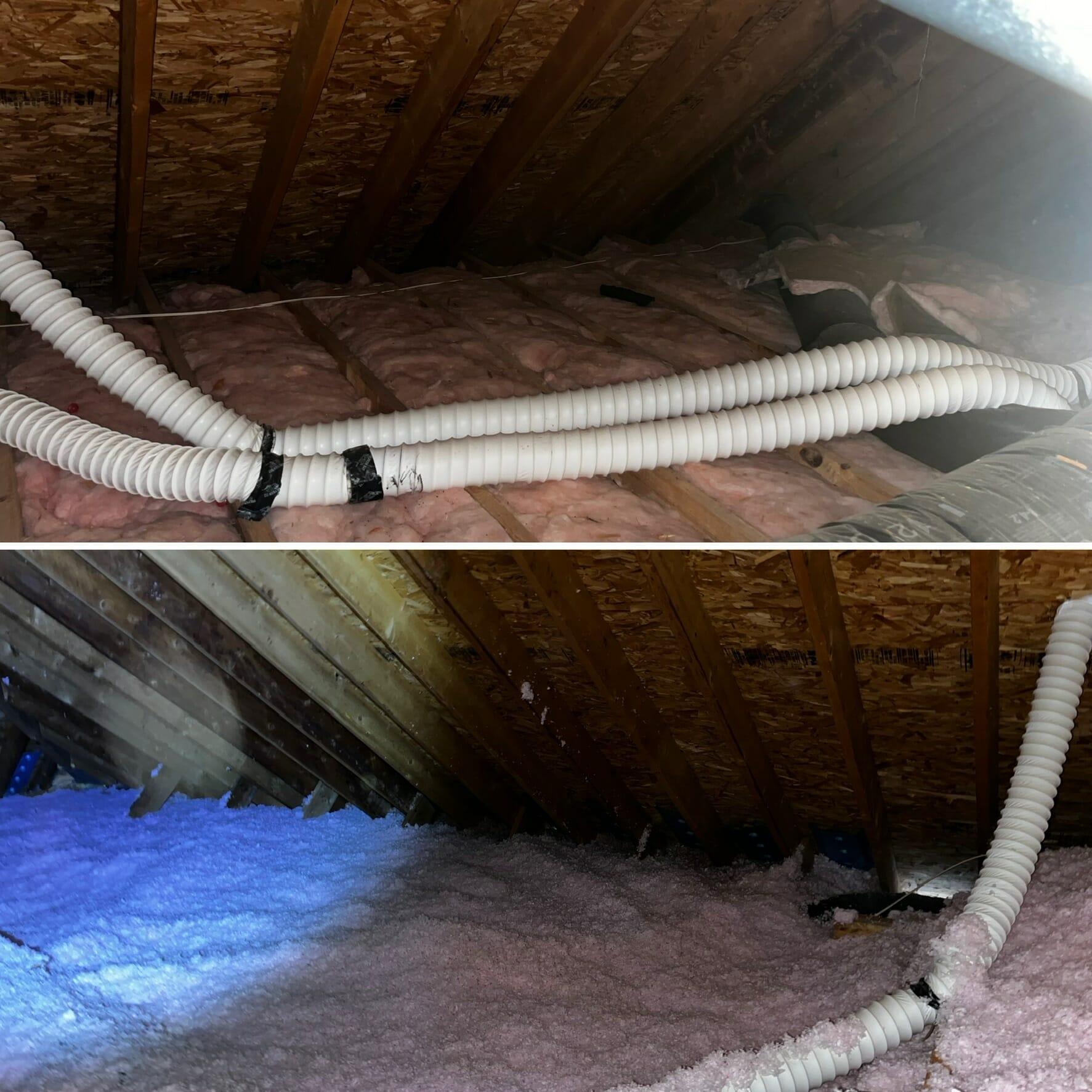
We often see high energy usage and uneven heat caused by leaky attics and crawl spaces. In local homes, we use crawlspace encapsulation and thermal imaging to test fixes.
Attic insulation installation, proper ventilation, and tight sealing create a single thermal envelope that cuts leaks and lowers energy usage in North Carolina.
What is Crawl Space Encapsulation?
Crawl space encapsulation covers the soil and walls under your home with a heavy plastic barrier and uses sealant to keep outside air and water out. This method helps create a controlled environment that guards against humidity, mold growth, and energy loss.
Key components of encapsulation
We seal crawl spaces and attics to stop air leaks. We work to help homeowners improve energy efficiency across North Carolina.
A heavy-duty vapor barrier is a thick polyethylene membrane that we install on the floor and walls to block soil moisture and ground vapor from entering the space. We also seal rim joists by applying spray foam to close gaps at the home perimeter and seal the attic plane to prevent air leaks and moisture infiltration. Additionally, insulated access doors are fitted with gaskets and rigid insulation to stop conditioned air from escaping through attic or crawl openings. Perimeter sealing is another vital step where we use approved sealants and mechanical fasteners to close cracks and joints to meet building codes and standards.
We often install a water pump and drainage system within a drain basin to remove collected water and protect the barrier from standing moisture. A whole-house dehumidifier is appropriately sized for your home to keep relative humidity under control and improve air quality. We also incorporate mechanical ventilation by adding conditioned air balancing or controlled vents to support proper ventilation and boost encapsulation effectiveness. Furthermore, attic insulation using fiberglass, cellulose, or spray foam layers is installed to reduce heat transfer and help form a tightly sealed thermal envelope.
To ensure everything functions perfectly, we perform regular inspections to find insulation gaps or seal failures and to verify that ventilation stays effective. Professional installation guarantees that Impact Crawlspace LLC follows local codes and standards so your system works safely and delivers lasting energy efficiency.
Benefits of encapsulation for energy efficiency
Crawl space encapsulation offers significant benefits for energy efficiency. It creates a barrier that prevents air leaks, which can waste energy and increase your household energy consumption. With this enhanced seal, we improve the overall comfort of your home while lowering heating and cooling requirements.
Encapsulation also helps improve indoor air quality. By reducing allergens and moisture levels, it creates a healthier living environment. The prevention of excessive humidity contributes to better airflow throughout the house, making your living spaces much more pleasant.
A well-encapsulated crawl space works hand-in-hand with attic insulation to form an effective thermal envelope. Encapsulation is an essential step for long-term energy efficiency in your home.
The Role of Attic Insulation in Energy Savings
Attic insulation plays a crucial role in energy efficiency. It prevents warm air from escaping in the winter and keeps cool air inside during summer, making your home comfortable year-round.
Types of attic insulation
We match the insulation type to your local climate, crawl space encapsulation goals, and energy targets.
Fiberglass batts are factory-cut glass fiber panels that fit easily between joists. They resist heat flow effectively when installed without gaps, providing R-values from R-11 to R-38 depending on thickness, and are perfect for easy retrofits in open attics with regular framing. Blown-in cellulose is a loose recycled paper fiber applied with a machine, offering about R-3.2 per inch. It fills irregular spaces beautifully and provides excellent thermal mass, making it ideal for covering existing joists or topping up aging insulation.
Loose-fill fiberglass consists of small glass fibers installed by blowing equipment. It provides R-2.2 to R-2.7 per inch and compresses less than cellulose under moisture, making it highly useful for irregular attic floors. Spray foam comes in open-cell and closed-cell varieties as a liquid foam that expands to seal air leaks. Open-cell foam offers about R-3.6 per inch, while closed-cell foam adds structural rigidity and provides R-6 to R-7 per inch. This makes spray foam highly effective for air sealing and creating a continuous barrier, particularly in humid areas and tight spaces.
We emphasize high-quality materials to ensure lasting performance. We carefully consider the hot and humid climate of Eastern North Carolina when selecting products, often recommending better moisture control in coastal zones. We pair this proper attic insulation with crawl space encapsulation to form a tightly sealed thermal envelope. Finally, we use thermal imaging and moisture meters to verify the effectiveness of our work after installation.
How insulation prevents energy loss
Attic insulation plays a vital role in reducing energy loss. It creates a barrier against heat transfer, keeping your home perfectly comfortable. During winter, it ensures that warm air stays inside the house.
In summer, it helps maintain cool air and blocks outside heat. This effective insulation keeps indoor temperatures stable throughout your home.
With proper attic insulation, you will notice lower energy consumption. Effective materials keep moisture out as well, which also improves your indoor air quality. Selecting the right type of insulation can lead to significant benefits while enhancing home comfort and overall efficiency.
How Encapsulation and Attic Insulation Work Together
Encapsulation and attic insulation create a sealed thermal barrier that keeps homes comfortable. This system reduces moisture, enhances air quality, and significantly lowers energy usage for homeowners.
Creating a sealed thermal envelope
A sealed thermal envelope enhances your home’s energy efficiency. We achieve this by sealing and insulating the crawl space and attic thoroughly. This barrier stops air leaks effectively, preventing unwanted drafts from entering your living spaces.
During encapsulation, we concentrate on blocking moisture infiltration as well. Reducing humidity levels protects your home from mold growth. Together, a tight seal in both the crawl space and the attic creates an ideal environment for regulating temperatures year-round.
This comprehensive approach leads to remarkable energy reduction while improving indoor comfort.
Reducing moisture and improving air quality
Encapsulation significantly reduces moisture levels in your home. It prevents water from seeping into the crawl space, which helps to control humidity. Lower humidity means fewer allergens like mold and dust mites can thrive.
This creates a healthier environment for your entire family.
Attic insulation also plays a vital role in improving air quality. Quality insulation keeps conditioned air inside and blocks outside contaminants. Together with encapsulation, attic insulation forms an effective barrier against unwanted moisture and airborne particles.
You get to enjoy cleaner air while reducing energy consumption through these methods that enhance overall efficiency as well.
Conclusion
We see how encapsulation and attic insulation work hand in hand. Both methods help create a sealed environment that cuts energy waste. As we improve air quality, we also lower monthly energy usage.
This combination maximizes comfort and efficiency for homeowners. Ultimately, choosing Impact Crawlspace LLC to implement these solutions shapes a much more efficient living space for everyone.